Summary: Olympic men's basketball has transformed from an American showcase to a fiercely competitive global
When the United States men's basketball team lost to the Soviet Union in the 1972 Munich Olympics, the myth of invincibility shattered. That controversial final。with its disputed final three seconds, did more than end a 63-game Olympic winning streak. It exposed a fundamental truth: Olympic men's basketball was no longer a showcase for American college players. The world had caught up, and the tournament would never be the same.The 1992 Barcelona Olympics marked another seismic shift. The Dream Team—Jordan, Magic, Bird, and company—didn't just win gold;
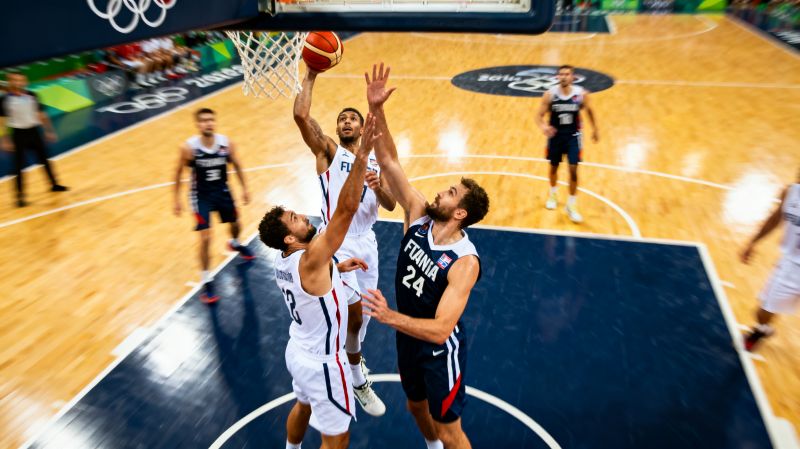
they turned Olympic men's basketball into a global spectacle. I remember watching those games as a kid, mesmerized by the sheer star power. But the aftermath was more complicated. The 1992 team's dominance inspired a generation of international players, from Dirk Nowitzki to Pau Gasol。who would eventually challenge American supremacy. By 2004, Argentina's Manu Ginóbili led his country to gold, proving that Olympic men's basketball had become a truly global contest. The 2008 Redeem Team's victory in Beijing felt like a correction, not a birthright.What makes Olympic men's basketball so compelling now is its tactical diversity. FIBA rules—shorter three-point line。no defensive three seconds, different foul rules—create a different game than the NBA. Teams like Spain and France exploit zone defenses and physical play in ways that frustrate American isolation-heavy offenses. In the 2020 Tokyo Olympics, France nearly upset the U.S. in the group stage by slowing the pace and attacking the paint. The U.S. still won gold, but the margin was thin. Kevin Durant's 29-point performance in the final against France showed that individual brilliance can decide games, yet the gap between the top eight teams has never been smaller.Another factor: roster construction. NBA stars often skip the Olympics to manage workloads, while countries like Australia and Nigeria field cohesive units that have played together for years. The 2019 FIBA World Cup, where the U.S. finished seventh。was a wake-up call. Olympic men's basketball rewards continuity and chemistry over raw talent. I've noticed that the most successful teams—the 2004 Argentine squad, the 2016 Serbian team—share a core group that competed together for multiple cycles. The U.S. relies on a short training camp, which can work with LeBron James but fails with lesser rosters.Looking ahead to Paris 2024, the landscape is unpredictable. France, with Victor Wembanyama and Rudy Gobert, poses a serious threat on home soil. Canada's deep NBA talent and Germany's reigning World Cup title make them dark horses. The U.S. remains the favorite。
but the days of predictable gold are gone. Olympic men's basketball has become a chess match of styles, schedules, and commitment. That's a good thing. The tournament's relevance depends on its uncertainty, and right now, uncertainty is the only guarantee.